
SPC vs WPC LVP for Miami Homes
By Danova Renovations
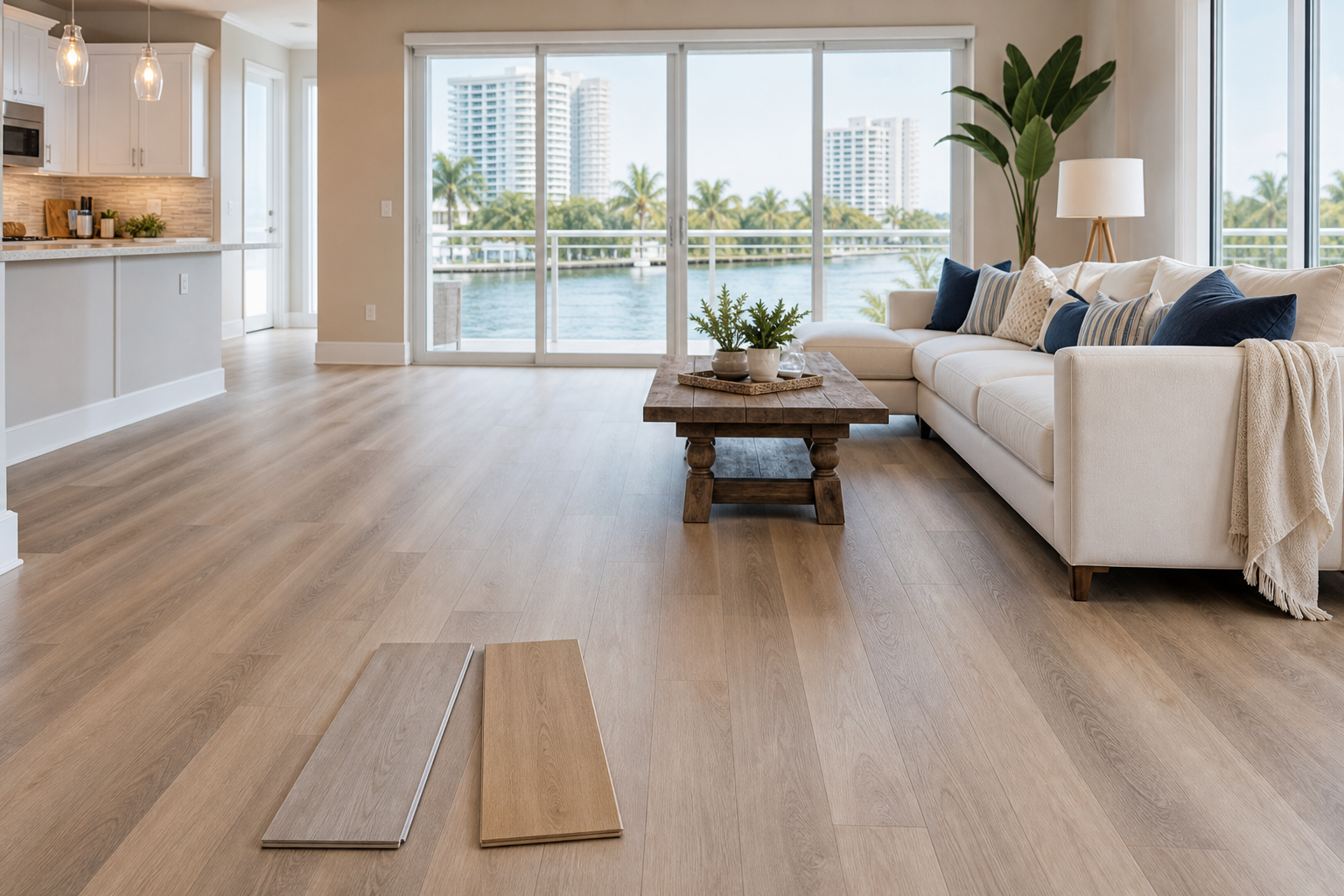
Luxury vinyl plank is one of the most common flooring requests Danova Renovations hears from homeowners who want a wood look without the risk of solid hardwood. In Fort Lauderdale, Miami, Davie, Hollywood, Dania Beach, Miramar, and the rest of South Florida, the bigger question is not just "Is LVP waterproof?" It is "Which core should I choose?"
Two labels come up often: SPC and WPC. SPC stands for stone plastic composite. WPC is usually called wood plastic composite or waterproof polymer core, depending on the manufacturer. Both can be good products, but they do not feel or perform exactly the same in a humid, air-conditioned, sand-tracking South Florida home.
Why LVP core type matters in South Florida
The top wear layer gets most of the attention, but the core affects how the plank handles daily life. A Miami living room may cycle between cold AC, bright sun through sliders, wet shoes after afternoon rain, and furniture movement during family gatherings. A Fort Lauderdale condo may also have HOA sound rules, elevator scheduling, and strict underlayment requirements.
No plank fixes a damp slab or rushed installation. Before Danova recommends any LVP, the project should include subfloor review, moisture testing when needed, flatness checks, expansion planning, door clearance, baseboard details, and the right transitions. That prep is what keeps a good material from becoming a callback.
Comparison: SPC vs WPC LVP
| Priority | SPC-core LVP | WPC-core LVP |
|---|---|---|
| Best fit | Busy homes, rentals, kitchens, entries, pet areas, and rooms where dimensional stability matters most. | Bedrooms, offices, upstairs spaces, and rooms where comfort and quiet matter more than maximum rigidity. |
| Humidity and heat | Dense, rigid core that is generally more stable during South Florida temperature and humidity swings. | Can perform well indoors, but softer cores may be more sensitive to heat, heavy loads, or poor prep. |
| Comfort underfoot | Firmer feel, closer to tile in stability but warmer than porcelain. | Softer and slightly cushioned, which some homeowners prefer for bedrooms and long standing. |
| Durability | Strong choice for rolling traffic, pets, sand, and high-use living areas when paired with a good wear layer. | Comfortable, but dents can be more noticeable under heavy furniture or concentrated weight. |
| Sound | May need the right pad or underlayment to meet condo expectations. | Often feels quieter underfoot, though HOA ratings still depend on the full assembly. |
| When Danova recommends it | When the homeowner wants practical, low-maintenance flooring for a humid, active home. | When comfort, warmth, and sound softness are higher priorities in a controlled space. |
What specs should homeowners compare?
Start with the wear layer. A thicker commercial-style wear layer can help with pets, kids, dining chairs, sandy shoes, and rental turnover. Next, look at total plank thickness, locking system quality, attached pad, manufacturer installation instructions, and warranty limits for sunlight, wet areas, and rolling loads.
Also ask where the floor will go. SPC is often the safer all-around pick for kitchens, living rooms, entries, and ground-floor slab homes. WPC can be comfortable in bedrooms or offices where water exposure is lower and furniture loads are predictable. For bathrooms, laundry rooms, and pool-adjacent areas, Danova may compare LVP with porcelain tile because tile still handles standing water and long-term wet zones better.
Maintenance and ROI considerations
Both SPC and WPC are easier to live with when the homeowner uses simple habits. Sweep grit regularly, place mats near sliders, lift heavy furniture instead of dragging it, and clean with products approved by the flooring manufacturer. Avoid steam mops on LVP; heat can stress the floor and may void warranties.
For ROI, buyers usually notice whether the flooring looks consistent, level, and professionally finished more than whether the core label is SPC or WPC. Clean baseboards, tight transitions, coordinated paint, and a floor color that fits South Florida light can make a renovation feel complete. Warm natural oak, sandy beige, and soft neutral plank tones often fit coastal homes better than very cold gray.
Frequently Asked Questions
- Is SPC better than WPC for Florida humidity? Often, yes. SPC is usually more dimensionally stable, which is helpful in humid homes with AC cycles and bright sun.
- Is WPC more comfortable than SPC? Usually. WPC tends to feel softer and quieter, which can be a benefit in bedrooms or offices.
- Can LVP go over a concrete slab? Often yes, but the slab should be checked for moisture, flatness, cracks, old adhesive, and height transitions first.
- Should I choose LVP or tile for wet rooms? LVP can work in many spaces, but porcelain tile is still the stronger choice for showers, heavy splash zones, and rooms with repeated standing water.
If you are comparing SPC vs WPC LVP for a Fort Lauderdale or Miami flooring project, Danova Renovations can inspect the slab, explain the trade-offs, and coordinate flooring with paint, baseboards, trim, and finishing details. Request a free estimate from Danova Renovations to choose a floor that fits your South Florida home.