
Silicone vs Acrylic Roof Coatings for Miami Flat Roof Decks
By Danova Renovations
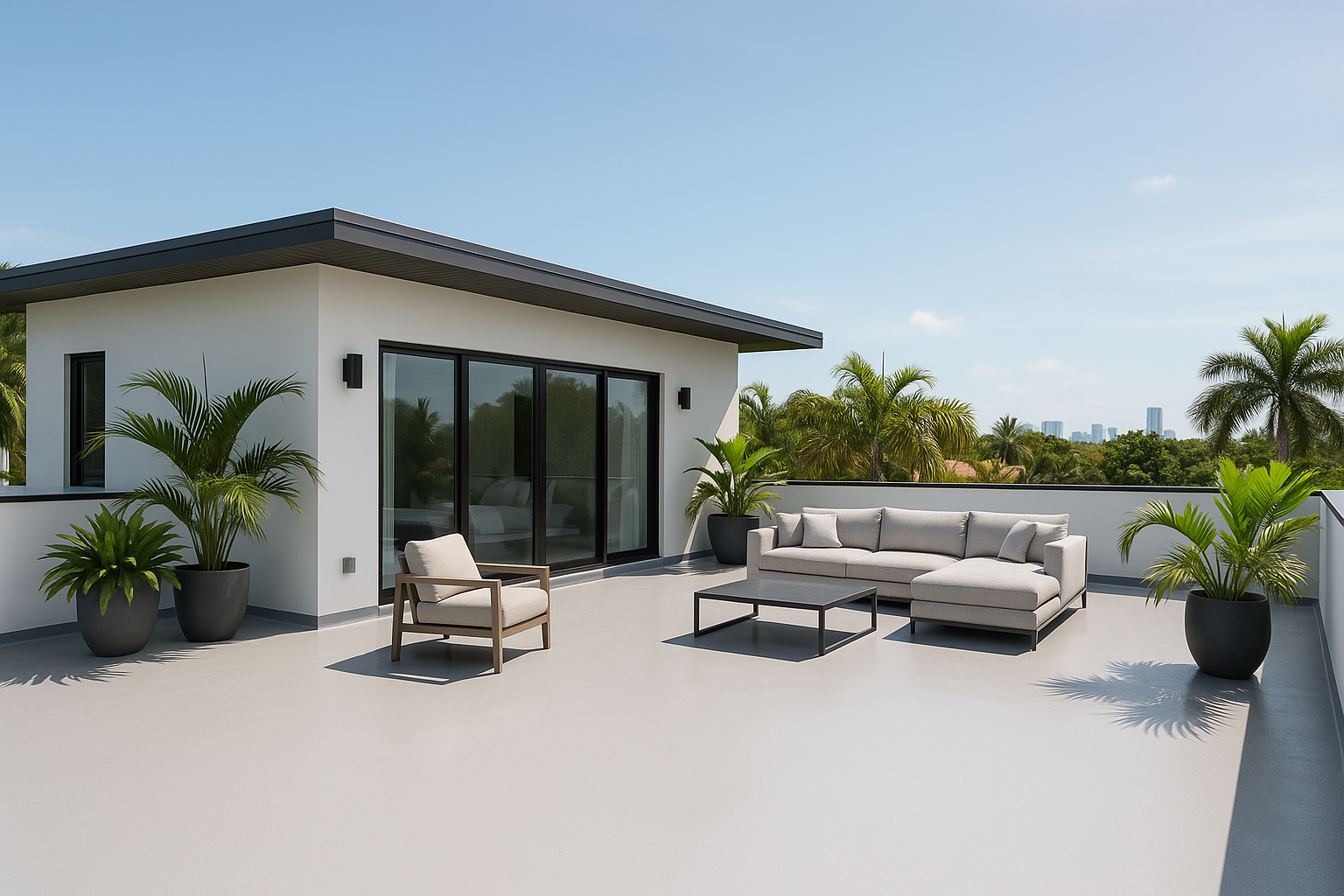
Flat roof decks are turning into premium outdoor living zones across Miami and Fort Lauderdale, but the waterproofing decisions behind those spaces are where most projects succeed or fail. Danova Renovations keeps seeing the same issue after rainy season: beautiful tile, furniture, and pergolas installed over coatings that were never selected for ponding water, UV load, or salt-heavy air. Within a year, blistering and soft spots appear.
If you are upgrading a rooftop deck, this comparison helps you pick between silicone and acrylic coating systems, plan the prep correctly, and avoid rework that can delay HOA approvals.
Why South Florida roof decks need a different coating strategy
- Ponding water is common. Many existing flat roofs in Broward and Miami-Dade hold shallow water for hours after storms.
- UV and heat are brutal. Summer surfaces can exceed 140°F, so lower-grade films become chalky fast.
- Salt exposure speeds deterioration. Windborne salt crystals break down weak topcoats and exposed seams.
- Foot traffic keeps rising. More homeowners are using roof decks for gyms, kitchens, and entertaining, not just mechanical access.
Comparison: silicone vs acrylic roof deck coatings
| Priority | Silicone coating system | Acrylic coating system |
|---|---|---|
| Water resistance | Excellent with long-term ponding tolerance; ideal where drains are imperfect. | Strong in normal rain cycles but less forgiving under persistent standing water. |
| UV durability | Holds elasticity and reflectivity longer under intense Miami sun. | Good UV resistance but can lose thickness faster in extreme exposure. |
| Surface prep sensitivity | Requires aggressive cleaning and adhesion primer; less forgiving of dusty substrates. | More forgiving during application when prep is solid and moisture readings are in range. |
| Recoating & maintenance | Recoat intervals are longer, but repairs may require careful tie-ins for appearance. | Easier and lower-cost refresh cycles for planned maintenance programs. |
| Budget profile | Higher initial material cost, lower risk in chronic-ponding zones. | Lower initial cost, attractive for roofs with proper drainage and periodic maintenance. |
For many Fort Lauderdale projects, we recommend silicone on known low spots and acrylic on upper, better-draining field areas when manufacturer specs allow a hybrid system.
Danova prep workflow before any coating goes down
- Moisture and adhesion testing: We run moisture readings and pull tests to confirm the existing membrane can accept new coating.
- Drainage corrections first: We patch birdbaths and reset drain strainers before touching coating chemistry.
- Crack and seam reinforcement: Polyester fabric and compatible mastics are embedded at transitions, penetrations, and parapet corners.
- Detail-first sequencing: We coat scuppers, drains, and wall transitions before field rolling so weak points are locked in.
- Controlled cure windows: Application starts in dry weather blocks with humidity and dew-point checks every day.
Timeline, HOA coordination, and disruption planning
Most occupied homes in Miami and Fort Lauderdale can complete a standard roof deck coating refresh in three to five working days, assuming weather cooperates and drain repairs are limited. We schedule noisy prep early, protect balcony glass and stucco, and submit product data sheets to HOA managers before mobilization.
When access is tight, staging matters more than speed. We map hose paths, material lifts, and cleanup zones so neighboring units are not impacted by overspray or debris.
Frequently Asked Questions
- Which system lasts longer in standing water areas? Silicone usually performs better in persistent ponding zones because it keeps flexibility and water resistance over time.
- Can acrylic still be the right choice? Yes, especially on roofs with proper slope where owners want lower upfront cost and predictable maintenance cycles.
- Do coatings replace structural repairs? No. Any active substrate movement, failed flashing, or structural cracking must be corrected first.
- How often should coatings be inspected? At least annually and after major storms, with drain checks every rainy season.
Choosing between silicone and acrylic is not just a product decision, it is a drainage, prep, and maintenance decision. If you want a coating plan that matches your roof conditions and protects your Fort Lauderdale or Miami investment, request a free estimate from Danova Renovations. We will inspect the deck, document risk areas, and give you a practical scope that balances durability, appearance, and long-term cost.