
Primer vs Paint-and-Primer for Miami Interiors
By Danova Renovations
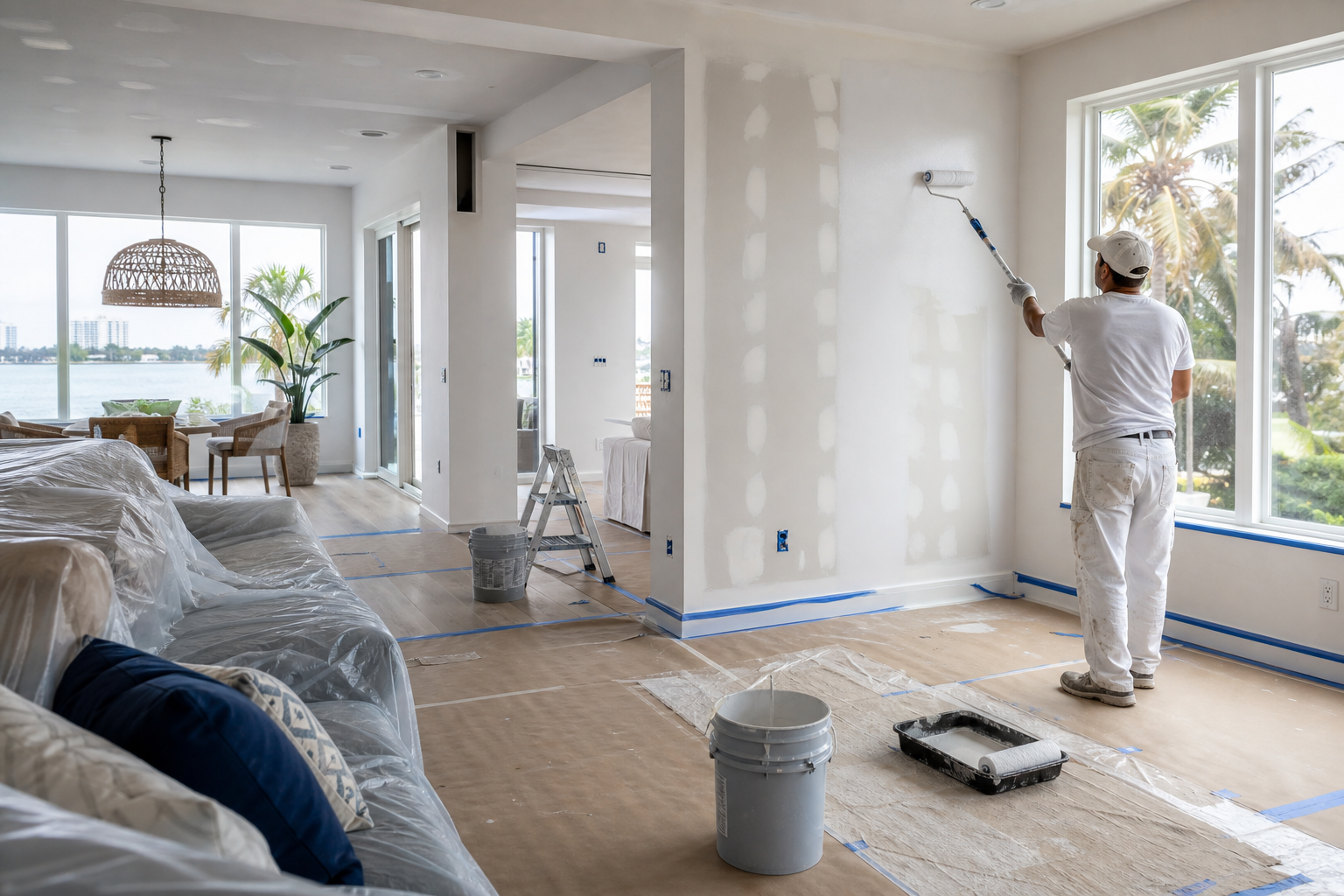
Fresh paint can make a Fort Lauderdale or Miami home feel cleaner fast, but the finish only lasts when the surface underneath is ready. That is where many South Florida repaint projects go sideways. A wall can look smooth from across the room while hiding old water stains, glossy patches, drywall repairs, kitchen residue, or moisture marks from years of AC cycles.
Homeowners often ask Danova Renovations whether a separate primer is still needed now that many cans say "paint and primer in one." The honest answer is: sometimes yes, sometimes no. Paint-and-primer products can be useful on clean, previously painted walls. Dedicated primer is still the safer choice when the surface needs sealing, stain blocking, or stronger adhesion.
Why primer decisions matter in South Florida
Humidity changes the way paint dries and bonds. In Davie, Hollywood, Dania Beach, Miramar, and nearby coastal neighborhoods, interiors may deal with damp bathrooms, sandy entries, bright window walls, and air-conditioning that runs almost year-round. If old paint is chalky, patched, stained, or slick, the finish coat has to do too many jobs at once.
Primer is not about final color. It is about creating a reliable base. The right primer can seal porous drywall compound, help cover dark color changes, reduce flashing over repairs, and lock down stains that would otherwise bleed through. Paint provides color, sheen, washability, and the finished look.
Comparison: dedicated primer vs paint-and-primer
- Best fit: Dedicated primer belongs on bare drywall, patched walls, stains, glossy surfaces, water marks, smoke residue, and dramatic color changes. Paint-and-primer fits clean, sound walls when the new color is similar.
- Humidity handling: Primer helps seal uneven or porous spots before the finish coat, which matters in humid rooms. Paint-and-primer can work in low-risk spaces, but it is not a specialty sealer.
- Durability: Primer improves adhesion when the substrate needs help. Paint-and-primer is durable when the wall was already stable, clean, and compatible with the chosen sheen.
- Cost profile: Primer adds a step, but may prevent extra finish coats or early repainting. Paint-and-primer can save time on simple bedroom, living room, or hallway refreshes.
- Maintenance: Primer supports a more even, washable finish because the topcoat cures over a consistent base. Paint-and-primer is easy to maintain when the surface was already in good condition.
- Danova's recommendation: Prime when inspection finds stains, patches, bare material, slick paint, or moisture history. Use paint-and-primer for straightforward repaints over a compatible existing finish.
Where homeowners should not skip primer
Primer is usually worth it on new drywall, repaired drywall, skim-coated areas, old water stains, marker, smoke residue, kitchen grease, and walls moving from dark to light colors. It is also smart when a room has had peeling paint, mildew cleanup, or unknown products from a prior DIY repaint.
Bathrooms, laundry rooms, and kitchens need extra judgment. A washable satin or semi-gloss finish helps, but sheen cannot fix a bad base. If the wall has moisture staining, soft drywall, or failing caulk nearby, Danova addresses the source before coating. Otherwise the new paint may look good for a short time and then show the same shadow, bubble, or peel.
Cost, ROI, and project planning
Primer is a small part of the visible renovation, but it protects the result people notice every day. A clean repaint helps rooms photograph better, makes flooring and baseboards look sharper, and can support resale appeal when buyers walk through. Skipping primer on a problem wall can cost more if the crew has to chase coverage with extra finish paint or return for stain bleed.
Before choosing products, walk each room in natural light. Look for shiny old paint, patched seams, nail pops, AC vent staining, and scuffed corners. Decide whether the project includes baseboards, flooring, cabinet painting, or drywall texture work, because the sequence affects masking, caulk, and touch-ups.
Frequently Asked Questions
- Do I always need primer before repainting? No. Clean, sound walls in a similar color may only need quality paint-and-primer after prep.
- When is dedicated primer required? Use it for bare drywall, patches, stains, glossy surfaces, heavy color changes, or walls with prior adhesion problems.
- Does primer stop mildew? Primer can help seal and support the coating system, but moisture, leaks, ventilation, and cleaning habits still matter.
- Can primer reduce total paint cost? Often, yes. On problem surfaces, primer can reduce the need for extra finish coats and rework.
- Should flooring or painting happen first? It depends on scope. Danova coordinates flooring, trim, caulk, wall repair, primer, and final paint so the finished room looks clean.
If you are comparing dedicated primer vs paint-and-primer for a Fort Lauderdale or Miami interior repaint, Danova Renovations can inspect the walls, explain the right prep, and coordinate paint with flooring, trim, and renovation details. Request a free estimate from Danova Renovations to choose a paint system that holds up in South Florida homes.