
Microcement vs Porcelain for Miami Balconies
By Danova Renovations
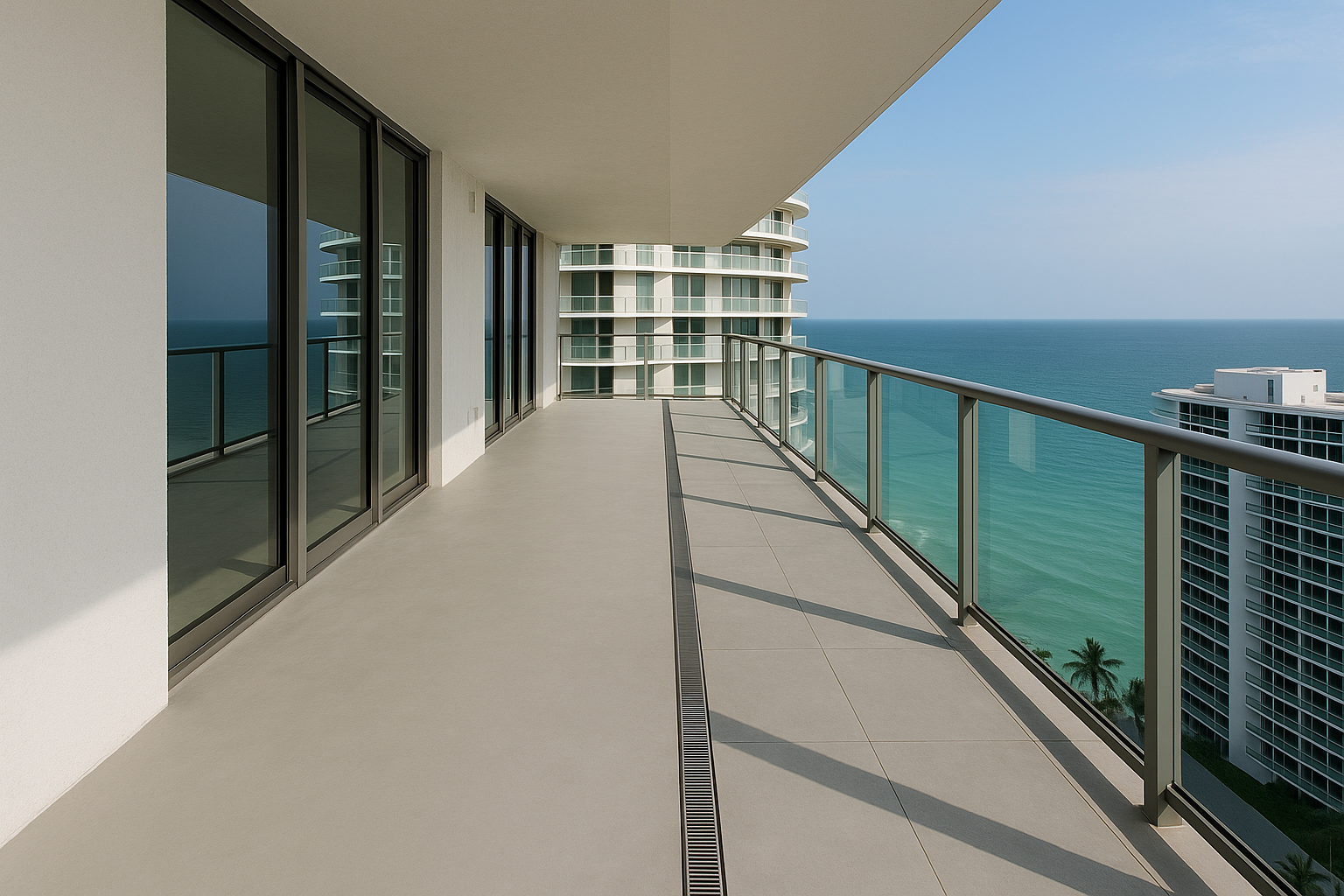
South Florida balconies are sold as extra living rooms, but salt, UV, and standing rain quickly chew through thin tile or mismatched coatings. Danova Renovations keeps hearing from Fort Lauderdale and Miami homeowners who want to host sunset cocktails without worrying about hollow tiles popping or HOA infractions. Microcement overlays and large-format porcelain dominate our 2026 consultations. Here’s how we help you pick the winner for your balcony and keep it smooth for another hurricane season.
Why coastal balconies fail early
- No vapor escape. Poured concrete decks breathe, and when film-forming paint traps vapor, blisters appear beneath tile.
- Salt crystals. Windborne salt settles in grout joints, grows, and pries materials apart.
- Improper slope. Anything less than 1/4-inch per foot toward the drain leaves puddles that stain coatings and feed mildew.
- Metal detailing. Rusting rail bases telegraph through new finishes if they aren’t isolated with epoxy.
Comparison: microcement vs. porcelain tile on Miami balconies
| Priority | Microcement overlay | Porcelain tile |
|---|---|---|
| Thickness/weight | 3-5 mm build keeps existing door thresholds and passes most HOA weight limits. | Heavier; may require engineer letter for older buildings and can raise transitions. |
| Texture & slip | Troweled texture can be tuned from matte to lightly burnished; anti-slip sealers rated for wet barefoot zones. | R11-rated tile needed for wet balconies; grout joints improve grip but collect salt. |
| Maintenance | Rinse and reseal every 18–24 months; no grout lines to scrub. | Replace cracked tiles individually; grout sealing annually to block salt. |
| Repairability | Spot blends are possible, but color variation may show; best for cohesive look. | Easy to swap one tile if you keep attic stock, but color lots must match. |
| Heat & comfort | Reflects heat when tinted light; comfortable for pets and kids. | Dense porcelain feels cooler but can be slippery if sunscreen or rain puddles sit. |
We often split the deck: microcement for lounge zones where a seamless threshold matters, porcelain planks tucked under outdoor kitchens or grills.
Prep work Danova insists on before any finish
- Moisture mapping. We take calcium chloride or ASTM F2170 readings. Anything above 85% relative humidity gets a two-part moisture mitigation epoxy first.
- Slope correction. Self-leveling seems tempting, but we use patch mixes to feather toward drains so water actually moves.
- Crack bridging. For microcement, we embed fiberglass mesh and elastomeric primers. For tile, we install uncoupling membranes that keep movement joints from telegraphing.
- Drain rebuilds. We swap corroded drain bodies and raise them flush with the new finish to keep HOA inspectors happy.
- Rail base isolation. Stainless hardware plus epoxy caps stops rust stains from bleeding through the coating.
Skipping any of these steps is why so many "budget" balcony projects peel within a year.
Paint, ceiling, and railing strategy
A balcony refresh isn’t only about the floor. We pressure-wash and repaint stucco ceilings with breathable elastomeric coatings so hairline cracks stop dripping. Railing touch-ups get two coats of marine-grade urethane after rust conversion. On Fort Lauderdale oceanfront towers we also spray the underside soffits with mildew-resistant acrylic so the neighbor below doesn’t see stains. Tying these paint scopes into your flooring project keeps the HOA paperwork to a single submission.
HOA, schedule, and budget notes for Broward & Miami-Dade
- Noise windows. Many Brickell, Sunny Isles, and Las Olas towers limit chipping or grinding to late mornings. We stage demolitions first, then switch to quiet hand troweling in the afternoon.
- Dry time vs. weather. Microcement can be walked on in 24 hours but needs 72 hours rain-free before sealing. Porcelain thin-set needs at least 48 hours before heavy furniture returns.
- Budget ranges. Microcement overlays on typical 120-square-foot balconies run $32–$38 per square foot with full prep. Porcelain packages with waterproofing and rail paint average $40–$48 depending on crane or hoist needs.
- Permits. Most cities treat these as repair-and-replace, but if the slab gets structural work we handle engineer letters and city inspections.
Frequently Asked Questions
- Will microcement crack in the sun? Not when we control joints. We score relief cuts along slab breaks and use UV-stable sealers so the finish flexes.
- Can I match my interior LVP color? Yes. Microcement pigments can be custom mixed, and porcelain lines often have coordinating indoor planks for zero-threshold looks.
- Do I need to remove every tile first? If the existing tile is hollow or the waterproofing is unknown, we demo to the slab. Solid, bonded tile can sometimes stay under microcement as long as we scarify and treat the grout lines.
- How often should balconies be rinsed? Monthly hose-downs plus quarterly neutral-cleaner mopping keep salt from crystallizing. Schedule a yearly inspection before hurricane season.
A balcony that sheds water, shrugs off salt, and matches your interior palette is a strong selling point for Miami and Fort Lauderdale buyers as well as renters hunting on Zillow. If you want a contractor who can compare microcement and porcelain on site, handle HOA paperwork, and stage crews around elevator bookings, request a free estimate from Danova Renovations. We’ll walk you through samples, prep scope, and a maintenance plan so your balcony stays party-ready all year.