
Large-Format vs Standard Tile for Miami Floors
By Danova Renovations
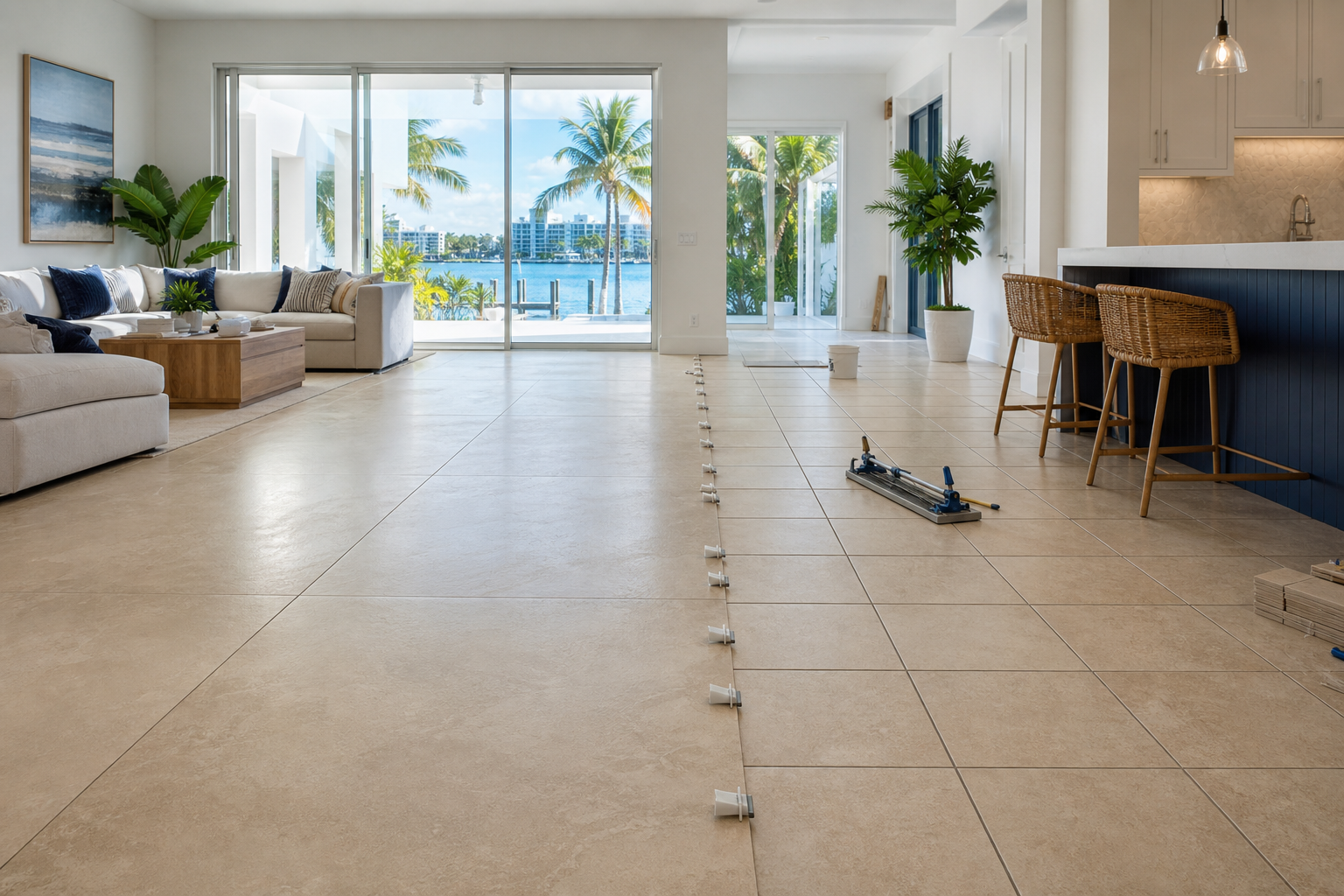
Porcelain tile is still one of the safest flooring choices for South Florida homes because it handles humidity, sandy shoes, pets, and daily mopping better than many wood-look materials. The question Danova Renovations hears more often now is whether a Fort Lauderdale or Miami homeowner should choose large-format porcelain tile or a more standard tile size.
Both options can last when the slab is prepared correctly. The better choice depends on room size, budget, subfloor flatness, grout maintenance, schedule, and the style of the home in Davie, Hollywood, Dania Beach, Miramar, and nearby neighborhoods.
Why tile size matters in humid South Florida homes
Large-format tile usually means fewer grout joints across the floor. That can make open living rooms, kitchens, and condo entries feel wider and more modern. Fewer grout lines may also mean less routine scrubbing, which matters in homes that track in rainwater, beach sand, and pool traffic.
Standard tile still has real advantages. It can be easier to lay out around tight hallways, older rooms, closets, and transitions. Smaller pieces can also be more forgiving when a concrete slab has dips, humps, or patched areas. Tile does not fix slab problems; the floor still needs moisture checks, leveling where needed, movement joints, and the correct setting materials.
Comparison: large-format tile vs standard tile
| Priority | Large-format porcelain tile | Standard porcelain tile |
|---|---|---|
| Best fit | Open living areas, kitchens, primary suites, and modern homes where a seamless look matters. | Older layouts, smaller rooms, rentals, laundry areas, and spaces with more cuts or transitions. |
| Visual impact | Fewer grout lines create a cleaner, higher-end look that photographs well for resale. | More grout lines create a familiar grid that can suit traditional homes and detailed layouts. |
| Slab prep | Needs a very flat substrate because big tiles show lippage quickly. | More forgiving, though the slab still needs proper prep and moisture review. |
| Maintenance | Less grout to clean, but each tile can be harder to replace if damaged. | More grout to maintain, but individual tile repairs can be simpler. |
| Cost profile | Often higher labor cost because handling, leveling, cutting, and layout precision matter more. | Often more budget-flexible, especially with readily available sizes and simpler installation. |
| When Danova recommends it | When the homeowner wants a modern, low-grout floor and the slab is ready for premium prep. | When budget control, room complexity, or practical repairs matter more than a seamless look. |
Cost, durability, and ROI considerations
The tile itself is only one part of the cost. Large-format projects often need more attention to floor flatness, leveling systems, careful cuts, and extra handling. That can be worth it in a Miami open-plan home where the goal is a clean, upgraded first impression.
Standard tile may be the smarter value when the room has many doorways, angled walls, or height transitions. It also gives homeowners more flexibility with patterns and slip-resistant choices for laundry rooms or entries.
For durability, both options can perform well in South Florida when installed correctly. The weak points are skipped prep, poor layout planning, wrong grout choices, or rushing before the slab and setting materials are ready. A professional walkthrough should cover moisture, cracks, hollow spots, baseboards, door clearances, and transitions.
For resale, buyers tend to notice clean lines, consistent grout, level transitions, and a floor that feels intentional. Large-format tile can signal a more current renovation. Standard tile can still look excellent when the color, grout width, and trim details are coordinated.
Practical planning tips before you choose
First, look at the room as a whole. Large tile works best when the layout allows long, uninterrupted runs. If the space has many small cuts, the premium look may get lost.
Second, choose grout color for real life. A soft beige, warm gray, or sand tone often hides daily dust better than bright white. High-performance grout may reduce maintenance in kitchens, baths, and pool-adjacent areas.
Third, coordinate the flooring schedule with painting and baseboards. Many Danova projects handle floor demo, slab prep, tile installation, baseboard replacement, caulking, and wall touch-ups as one planned renovation.
Frequently Asked Questions
- Is large-format tile harder to install? Yes, it usually requires flatter floors, careful handling, and more layout planning than standard tile.
- Does fewer grout lines mean no maintenance? No. Grout still needs proper installation and cleaning, but there is less of it to manage.
- Which tile size is best for condos? It depends on HOA rules, sound requirements, elevator access, slab condition, and room layout.
- Can tile go over an old South Florida slab? Often yes, but the slab should be inspected for moisture, cracks, bond issues, and flatness first.
If you are comparing large-format vs standard porcelain tile for a Fort Lauderdale or Miami flooring project, Danova Renovations can inspect the slab, explain the trade-offs, and coordinate tile, paint, trim, and finishing details. Request a free estimate from Danova Renovations to choose a floor that fits your South Florida home.