
Epoxy vs Cement Grout for Miami Bathrooms
By Danova Renovations
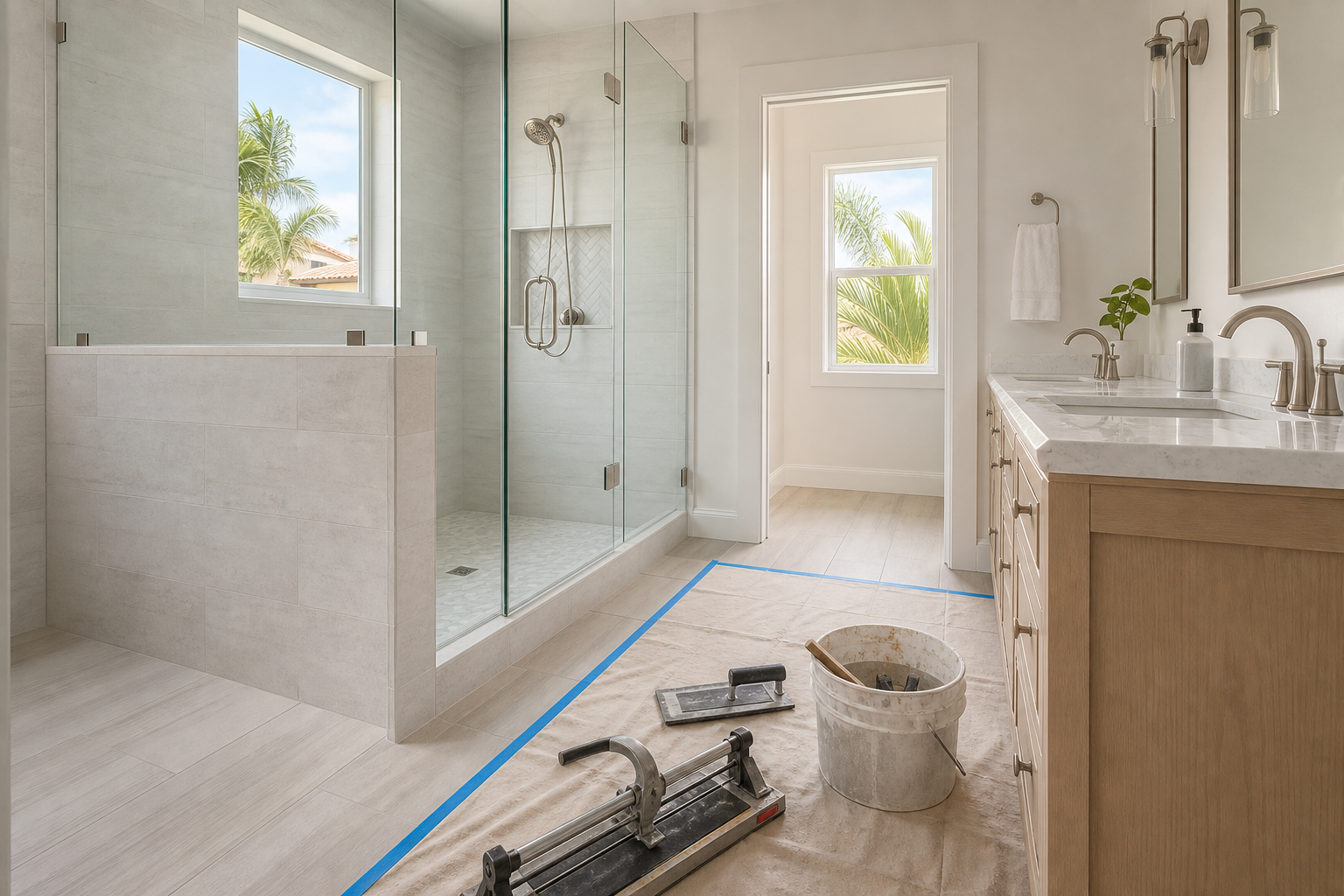
Bathroom tile is only as reliable as the grout between the pieces. In Fort Lauderdale, Miami, Davie, Hollywood, Dania Beach, and Miramar, that matters because bathrooms stay damp longer than homeowners expect. Steam, sandy feet, wet towels, poor ventilation, and summer humidity can turn weak grout into stained lines, mildew callbacks, or loose tile edges.
When Danova Renovations helps a homeowner plan a shower, bathroom floor, or tub surround, two grout choices come up often: epoxy grout and cement-based grout. Both can work. The right choice depends on the tile, wet-zone exposure, cleaning habits, budget, and how long the owner wants to go before resealing or refreshing joints.
Why grout choice matters in South Florida bathrooms
Porcelain tile is popular in South Florida because it handles moisture well and cleans easily. Grout is the more vulnerable part of the system. Standard cement grout is porous unless sealed and maintained. Epoxy grout is denser and less absorbent, which makes it attractive for showers, niches, benches, and bathroom floors that see daily water.
Grout is not a substitute for waterproofing. A shower still needs the right backer, membrane, slope, movement joints, and caulk at changes of plane. But once the tile system is built correctly, grout choice affects day-to-day cleaning, stain resistance, and how fresh the bathroom looks after the first year.
Comparison: epoxy grout vs cement grout
| Priority | Epoxy grout | Cement-based grout |
|---|---|---|
| Best fit | Showers, wet bathroom floors, rentals, busy family bathrooms, and light grout colors that need stain resistance. | Powder rooms, lower-splash walls, budget-conscious updates, and projects where resealing is acceptable. |
| Moisture resistance | Less absorbent, so it is harder for water, soap, and body oils to soak in. | More porous unless sealed, so it needs maintenance in humid rooms. |
| Cleaning | Usually easier to wipe down with gentle cleaners once fully cured. | Can clean well, but light colors may stain sooner if sealing is skipped. |
| Installation difficulty | Less forgiving to install; working time and cleanup must be managed carefully. | Familiar to many installers and easier to shape in some tile layouts. |
| Cost | Higher material and labor cost, especially in detailed showers. | Lower upfront cost for many bathroom tile projects. |
| When Danova recommends it | When long-term shower durability and low maintenance are priorities. | When the area is drier, the budget is tight, or the homeowner accepts resealing. |
Cost, maintenance, and resale value
Epoxy grout usually costs more upfront, but it can be the better value in a Miami or Fort Lauderdale primary shower because it reduces the maintenance burden. It is especially useful with white, warm gray, or light beige grout lines that would otherwise show soap residue quickly.
Cement grout still has a place. A guest bath floor, decorative wall tile, or powder room may not need the added cost of epoxy. If cement grout is selected, Danova talks through sealing, cleaner choices, and realistic upkeep. Harsh scrub pads, bleach-heavy routines, and ignored ventilation can shorten the life of either option.
For resale, buyers rarely ask what grout was used. They notice whether the bathroom looks clean, dry, and professionally finished. Straight grout lines, neat silicone at corners, coordinated paint sheen, and a properly vented room all send the same message: this renovation was planned, not patched.
Practical planning tips before you choose
Start with the wettest zones. Shower floors, benches, niches, and curb tops deserve the most durable plan because they collect water and soap. Bathroom walls outside the shower may be fine with cement grout when the tile and layout are simple.
Next, match grout color to real maintenance habits. Bright white can look beautiful in a sample, but a soft warm gray or sand tone may age better in a busy South Florida home. If the bathroom connects to a pool area, laundry space, or kids' bedroom, prioritize cleanability.
Finally, do not ignore ventilation and paint. A humidity-sensing exhaust fan, mold-resistant primer where appropriate, and washable satin or semi-gloss bathroom paint help the tile system stay cleaner. Grout works best when the whole room dries out faster.
Frequently Asked Questions
- Is epoxy grout always worth it? Not always. It is strongest in showers and high-use bathrooms, while cement grout can be practical in drier or lower-budget areas.
- Does epoxy grout prevent mold? It resists moisture and staining better, but mold can still grow on soap film if the bathroom is not cleaned and ventilated.
- Can old cement grout be replaced with epoxy? Sometimes. The old grout usually needs careful removal, and the tile must be stable before regrouting.
- What grout color is easiest to maintain? Soft gray, taupe, and sand tones often hide daily use better than bright white or very dark grout.
If you are comparing epoxy grout vs cement grout for a Fort Lauderdale or Miami bathroom remodel, Danova Renovations can inspect the tile plan, explain the trade-offs, and coordinate grout with shower waterproofing, flooring, trim, and paint. Request a free estimate from Danova Renovations to build a bathroom that looks clean and holds up in South Florida humidity.