
Bathroom Paint vs Tile Walls for Humid Miami Homes
By Danova Renovations
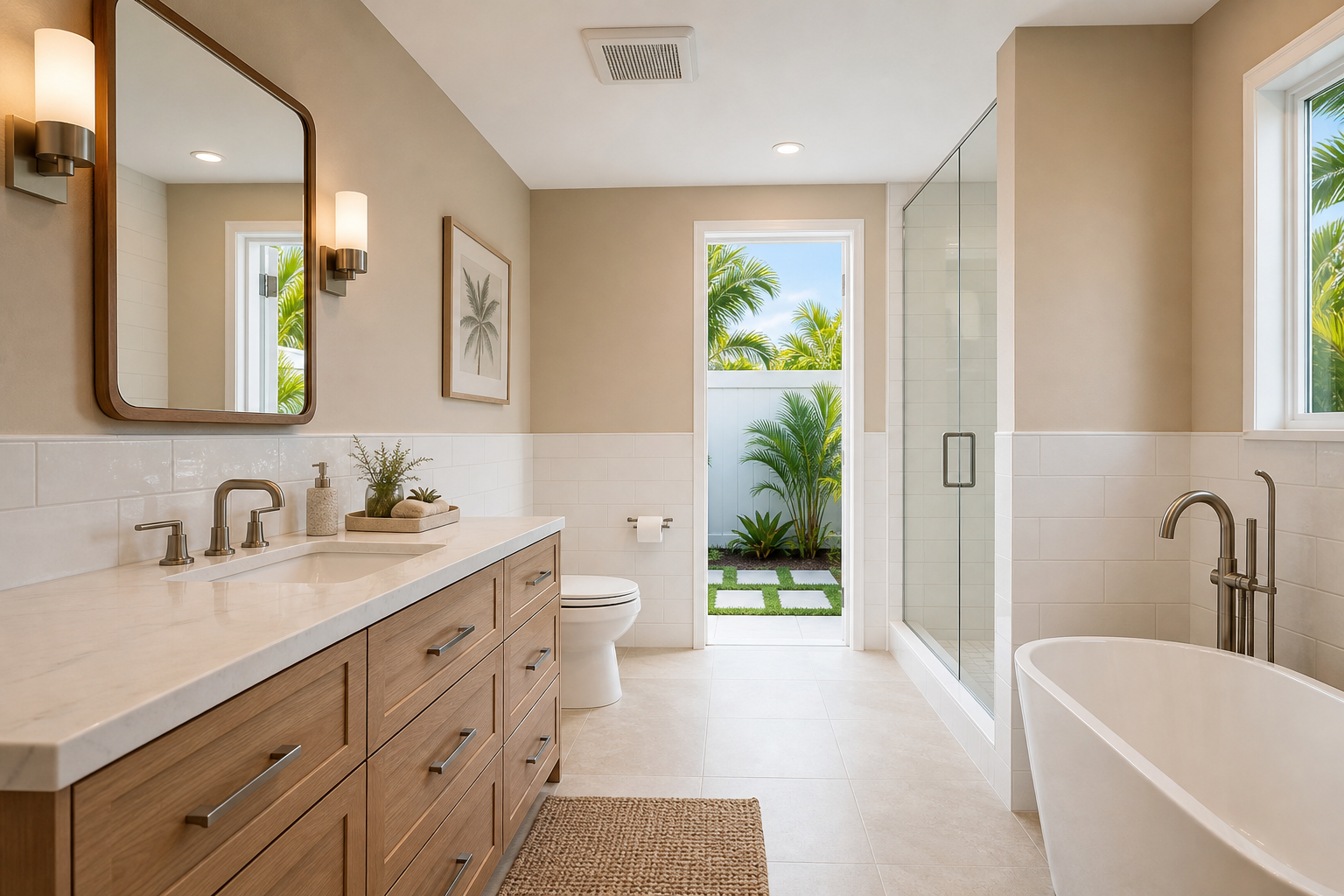
Bathroom walls in Fort Lauderdale and Miami do not fail because of one steamy shower. They fail because humidity, weak ventilation, old caulk, and splash zones work together every day. Danova Renovations sees this often in guest baths, condo primary suites, and rental properties where a quick repaint was expected to solve stains that were really moisture problems.
The right upgrade may be a professional repaint with mildew-resistant acrylic and better prep. It may be a tile wainscot, a full-height shower wall, or a flooring and trim refresh that removes hidden water damage. Use this guide to decide how far your South Florida bathroom project should go before you spend money twice.
Why humidity changes the bathroom scope
- Paint needs a dry, clean substrate. If drywall is soft, chalky, or stained, primer cannot make it sound again.
- Ventilation matters as much as sheen. A good fan, clear door undercut, and habit of running ventilation after showers help coatings cure and stay cleaner.
- Splash zones need different protection. Walls beside tubs, vanities, and kids' baths take more water than a hallway wall, so material choice should follow use.
- Flooring can reveal the real issue. Swollen baseboards or loose tile often point to water traveling below the wall surface.
Comparison: bathroom paint vs tile walls
| Priority | Mildew-resistant bathroom paint | Tile wainscot or full tile walls |
|---|---|---|
| Best fit | Powder rooms, low-splash guest baths, ceilings, and walls outside the wet zone. | Tub surrounds, shower walls, vanity splash areas, and busy family bathrooms. |
| Moisture protection | Performs well when drywall is solid, seams are sealed, and ventilation works. | Handles repeated splashes better when waterproofing, grout, and movement joints are installed correctly. |
| Maintenance | Easy to wipe and touch up, but repeated scrubbing can polish or dull the sheen. | Grout needs cleaning and occasional sealing, but the surface tolerates heavier use. |
| Design flexibility | Faster color changes, softer light, and lower disruption when updating resale neutrals. | Adds texture, pattern, and a more finished look for Miami and Fort Lauderdale listings. |
| Budget profile | Lower upfront cost if repairs are light and no tile demolition is needed. | Higher upfront investment, but it can reduce repaint cycles in wet or high-traffic zones. |
| When Danova recommends it | When the bathroom is structurally dry and the goal is a clean refresh. | When stains return, caulk fails repeatedly, or water reaches walls during normal use. |
Danova's bathroom wall upgrade checklist
- Moisture inspection: We check drywall, baseboards, vanity backs, and flooring transitions before specifying paint or tile.
- Surface repair: Soft drywall is removed, seams are patched, and glossy old paint is sanded so primer can grip.
- Primer and sheen selection: Most bathrooms get bonding or stain-blocking primer, then washable satin on walls and flat moisture-aware ceiling paint above.
- Waterproofing where needed: Tile areas get proper backer board, membrane details, sealed corners, and flexible caulk at plane changes.
- Finish coordination: We repaint trim, reset baseboards, and align tile edges with mirrors, vanities, and flooring so the room looks intentional.
Where flooring and trim fit in
Bathroom wall decisions should not happen in isolation. If porcelain floor tile is cracked, luxury vinyl is lifting, or baseboards are swollen, painting over the walls only hides the symptom. In many South Florida homes, Danova pairs a wall refresh with new waterproof flooring, fresh shoe molding, and better caulk lines around tubs and vanities.
For condos, we also plan around HOA work windows, elevator protection, and low-odor products. For single-family homes, we look at exhaust routing, door clearance, and whether nearby bedrooms need dust containment during drywall or tile work.
Frequently Asked Questions
- Is satin or semi-gloss better for bathroom walls? Satin is usually the best balance for walls because it wipes clean without highlighting every drywall wave. Semi-gloss works better on trim, doors, and high-touch millwork.
- Can paint stop mildew by itself? No. Mildew-resistant paint helps, but moisture control, ventilation, clean caulk, and sound drywall are the real foundation.
- Should I tile every bathroom wall? Not always. Full tile is useful in wet, rental, or luxury baths, but a tile wainscot plus painted upper wall often gives strong protection with a warmer look.
- Do I need new flooring too? If edges are swollen, grout is cracking, or water reaches the baseboards, flooring should be evaluated before wall finishes are finalized.
A bathroom that stays clean in South Florida is built as a system: ventilation, waterproofing, flooring, trim, and the right finish in the right zone. Danova Renovations can inspect your Fort Lauderdale or Miami bathroom, explain whether paint or tile is the smarter move, and build a scope that avoids repeat repairs. Request a free estimate from Danova Renovations to get a practical bathroom wall plan for your home.